
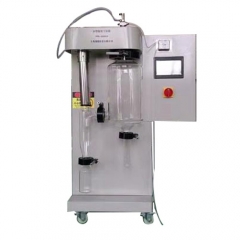
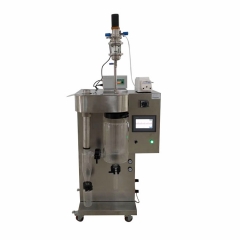
High quality 1.5L scale lab spray dryer equipment
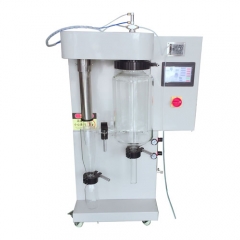
Lab scale spray dryer is suitable for the production of in universities, research institutes and food and pharmaceutical chemical enterprises.
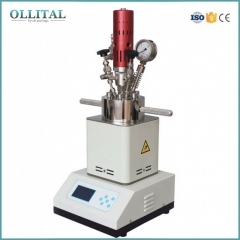
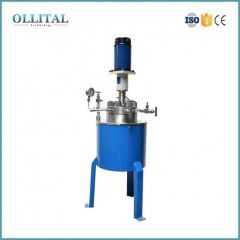
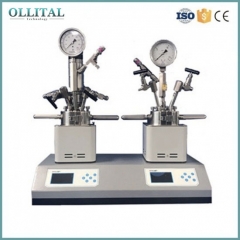
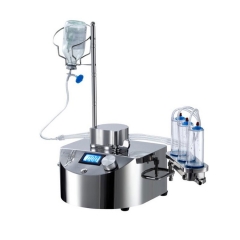
So, which one is right for your application? The answer depends largely on your raw material, the final product you need, and your production requirements.
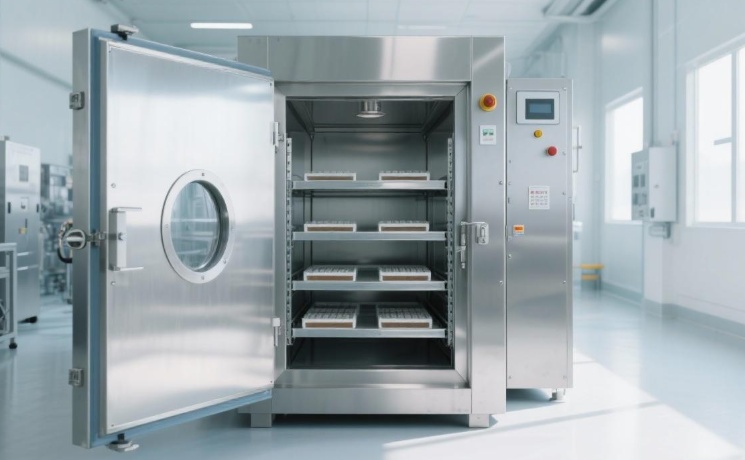
A vacuum dryer removes moisture by reducing the pressure inside a sealed drying chamber. Under vacuum conditions, water evaporates at a lower temperature than it would at atmospheric pressure.
This makes vacuum drying particularly useful for materials that are sensitive to heat, oxygen, or prolonged exposure to high temperatures.
Common applications include drying powders, granules, chemical materials, plant extracts, and other products that require controlled drying conditions.
One advantage of a vacuum drying machine is its relatively gentle drying process. However, drying time can be longer than with spray drying, especially when processing large quantities of wet material.
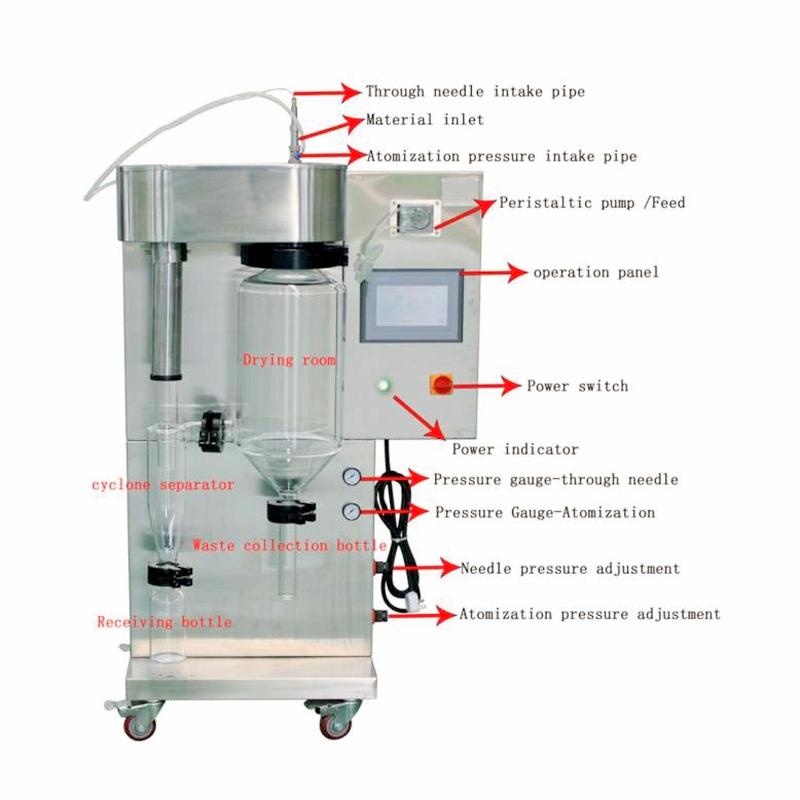
A spray dryer works differently. Instead of drying material in a chamber under reduced pressure, it converts a liquid feed into fine droplets using an atomizer or spray nozzle.
These droplets come into contact with hot drying air, causing moisture to evaporate rapidly. The resulting dry particles are then collected through a separation system, such as a cyclone separator or filter.
A spray dryer machine is commonly used for solutions, suspensions, emulsions, and other pumpable liquids. Typical applications include food ingredients, ceramic powders, chemical products, and laboratory research.
The main advantage of spray drying is its ability to produce powder directly from liquid in a relatively short processing time. The final particle size and moisture content depend on factors such as feed properties, atomization, and drying conditions.
The biggest difference lies in the starting material and the drying process.
Working principle: Vacuum drying relies on reduced pressure, while spray drying uses atomization and hot air.
Suitable materials: Vacuum dryers are often used for wet solids, pastes, and materials requiring low-temperature drying. Spray dryers are designed primarily for liquid feeds.
Final product: Vacuum drying typically produces dried solids, which may require further crushing or milling. Spray drying can produce powder directly.
Processing time: Spray drying is generally faster for suitable liquid feeds, while vacuum drying may require longer cycles.
Heat sensitivity: Vacuum drying can help protect heat-sensitive materials by lowering the evaporation temperature. Spray drying can also process certain heat-sensitive products because droplets dry quickly, but thermal suitability must be evaluated for each material.
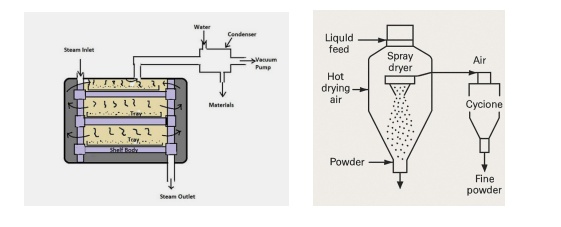
A vacuum dryer may be the better option if you need to dry wet solids at reduced pressure or minimize exposure to high temperatures and oxygen.
A spray dryer is usually more suitable if your material is a liquid and your goal is to produce a free-flowing powder with a relatively consistent particle size.
Before choosing a system, consider the material’s viscosity, solids content, heat sensitivity, required moisture level, and expected production capacity. For laboratory applications, a small spray dryer can be useful for testing formulations and evaluating drying parameters before scaling up.
Ultimately, the best drying solution is the one that matches your material properties and production goals. If you are unsure which technology fits your process, conducting a drying test is often the most practical way to make an informed decision.



 Интернет Сервис
 +86 15960821529
 kevin@ollital.comkevinollital@gmail.com
 +86 15960821529
 +8615960821529


