
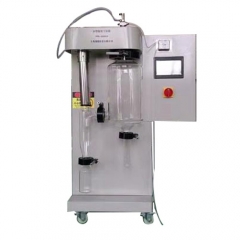
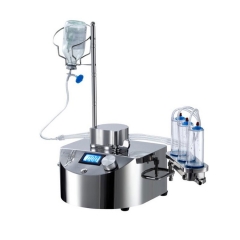
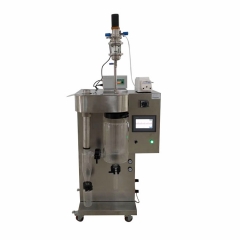
High quality 1.5L scale lab spray dryer equipment
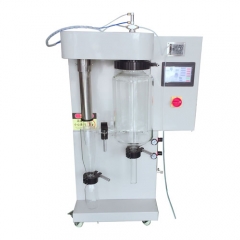
Lab scale spray dryer is suitable for the production of in universities, research institutes and food and pharmaceutical chemical enterprises.
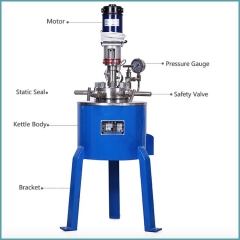
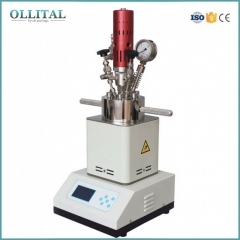
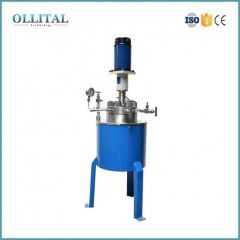
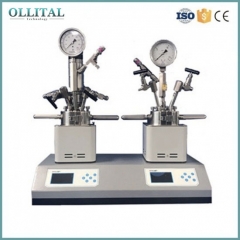
In materials synthesis and sample preparation laboratories, there is a device with an extremely simple structure—no pressure gauge, no stirring motor, no complex control system. It is composed of a stainless steel outer shell and an internal PTFE liner. After tight sealing, the reactor can be heated in a drying oven. This device is the hydrothermal synthesis reactor (also known as digestion vessel or pressure bomb), a sealed container capable of decomposing insoluble substances.
Its core working principle relies on the sealed high-temperature and high-pressure environment inside the reactor. Together with strong acid or alkali media, it can quickly digest insoluble samples.
In terms of specific applications, the hydrothermal synthesis reactor primarily serves two types of functions: sample pretreatment for analytical testing and synthesis reactions. The former is used for digestion pretreatment in analytical methods such as atomic absorption spectroscopy, inductively coupled plasma optical emission spectroscopy, gas chromatography, and liquid chromatography. It supports heavy metal testing (Pb, Cu, Cd, Zn, Ca, Mn, Fe, Hg, etc.) and digestion of food, aquatic products, sludge, rare earth samples and pesticide residues. It is a commonly used pretreatment tool for the determination of trace elements and ultratrace elements. The latter serves as a high-temperature-resistant, high-pressure-resistant, corrosion-resistant, and high-purity reaction vessel for small-scale synthesis, organic synthesis, hydrothermal synthesis, crystal growth, and sample digestion extraction.
Based on the above characteristics, the hydrothermal synthesis reactor has been widely used in research and production across various fields, including petrochemical industry, biomedicine, materials science, geochemistry, environmental science, food science, and commodity inspection.
In terms of structure, the hydrothermal synthesis reactor consists of two main parts: a stainless steel shell and a liner. The stainless steel shell features a circular tongue-and-groove sealing design and is securely tightened by manual screw compression. The main body is generally fabricated from 304 or 316L stainless steel with outstanding pressure and corrosion resistance. There are two main sealing methods: threaded sealing and flanged bolted sealing. Threaded sealing is achieved by screwing the vessel body and lid together, offering a compact structure suitable for conventional pressure and small-volume models. Flanged bolted sealing uses flanges with bolts for tightening, providing higher sealing surface pressure capacity, suitable for higher pressure or larger volume models.
The liner, as the core component that comes into direct contact with reaction materials, is available in two main material options: PTFE (polytetrafluoroethylene) and PPL (polyparaphenylene). PTFE liners offer excellent chemical inertness, resisting strong acids, strong alkalis, aqua regia, and various organic solvents, with a maximum service temperature generally not exceeding 200–220 °C. PPL liners are benzene-ring chain polymers with better thermal stability than PTFE, offering a maximum service temperature of up to 260–280 °C.
No pressure gauge, no valve, no stirring paddle. Just tighten it and place it into an oven or oil bath for heating.
The pressure inside the hydrothermal synthesis reactor is determined by the heating temperature. As the temperature rises, the solvent inside the vessel generates vapor pressure, and the pressure increases accordingly—this pressure is naturally established within the sealed system, requiring no manual control and no real-time reading.
Its safety logic is to ensure that the pressure does not exceed the design value by limiting the operating temperature, filling volume, and solvent type. The maximum operating pressure for a conventional PTFE-lined hydrothermal synthesis reactor is approximately 3 MPa. Safe operation relies on three key constraints: limited filling volume, solvent selection rules and avoidance of gas-generating reactions. Detailed specifications are listed in the usage precautions below.
| Liner Material | Maximum Operating Temperature | Application Scenarios |
|---|---|---|
| PTFE (Polytetrafluoroethylene) | ≤200–220 °C | Conventional hydrothermal synthesis, acid digestion, most nanomaterial preparation |
| PPL (Polyparaphenylene) | ≤260–280 °C | Synthesis systems requiring higher temperatures |
For conventional hydrothermal synthesis, PTFE is sufficient; PPL should be selected when the reaction temperature exceeds 200 °C.
The hydrothermal synthesis reactor has a simple structure, but improper operation poses safety risks. The following points should be observed during use:
Boasting a minimalist structure without pressure gauges, stirring components or complicated control systems, the hydrothermal synthesis reactor delivers reliable performance. It remains an essential basic device for nanomaterial preparation, crystal growth and sample digestion. The key to safe and efficient hydrothermal reactions lies in understanding its working principles and operating limits, as well as selecting proper liners according to experimental requirements.



 Интернет Сервис
 +86 15960821529
 kevin@ollital.comkevinollital@gmail.com
 +86 15960821529
 +8615960821529


