

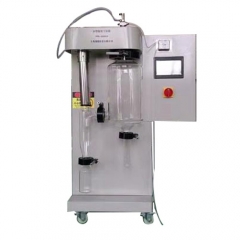
High quality 1.5L scale lab spray dryer equipment
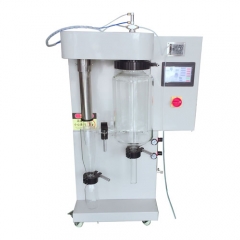
Lab scale spray dryer is suitable for the production of in universities, research institutes and food and pharmaceutical chemical enterprises.
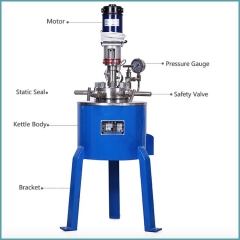
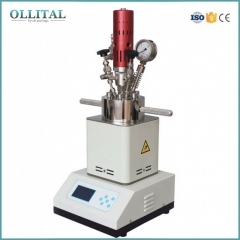
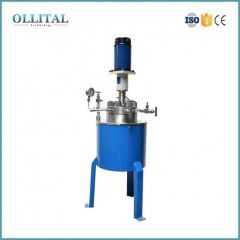
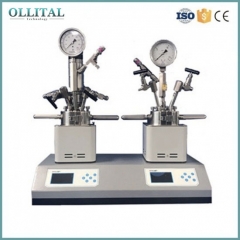
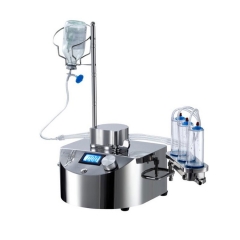
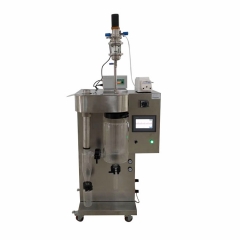


A granulator is a specialized equipment used to process plastic raw materials, modified materials or blended substances into uniform particles. It is widely applied in scenarios such as high polymer material research and development, modification granulation, color masterbatch preparation, recycled material regeneration, and small-scale production. For university laboratories, research institutions, and new material enterprises, an experimental-type granulator that is easy to operate, adjustable in parameters, and saves materials can significantly reduce the equipment investment threshold for formula development and accelerate the efficiency of material pilot testing.
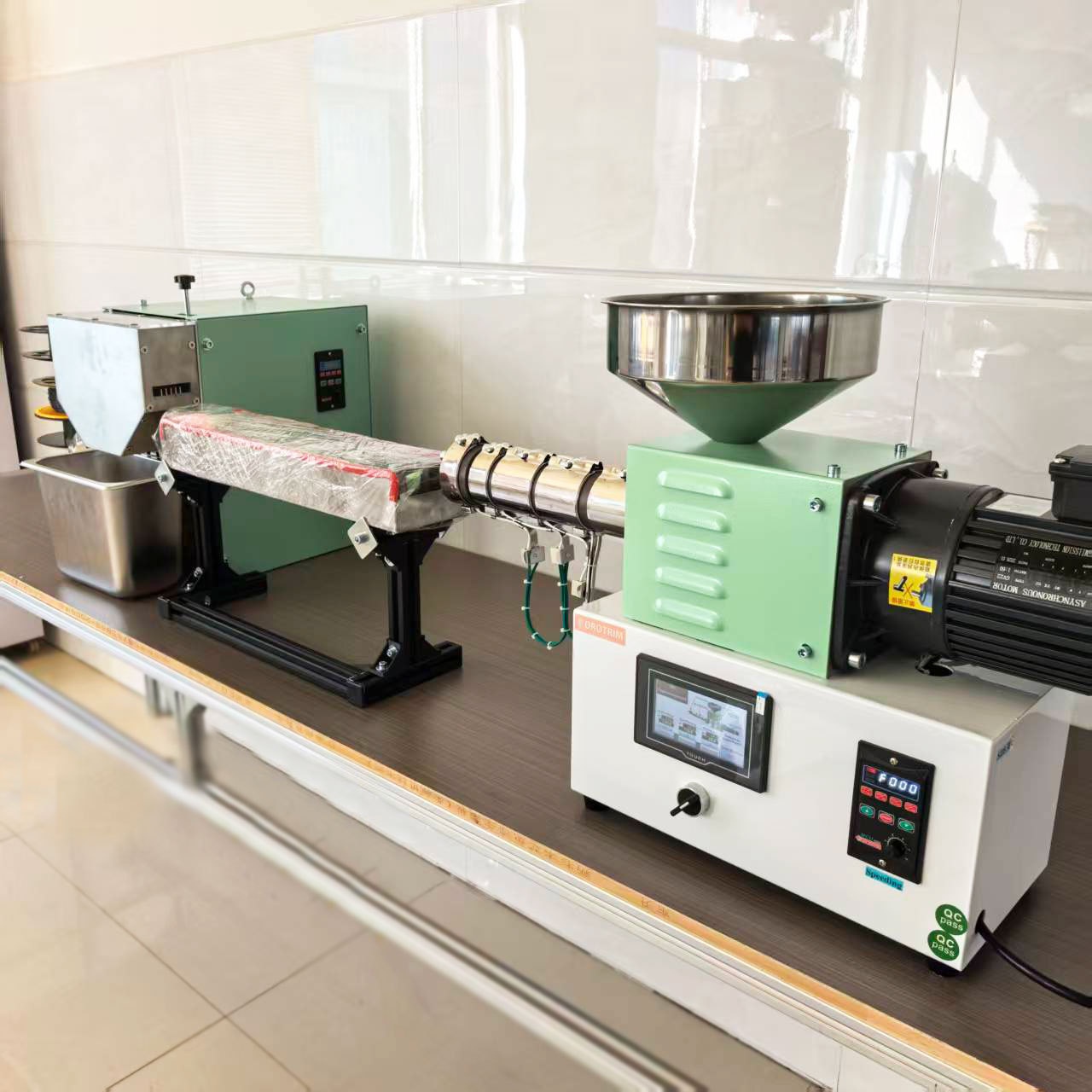
The unit adopts a single-screw strand pelletizing process with water cooling. The entire process consists of six stages: feeding, melting and plasticizing, extrusion, water cooling, haul-off, and pelletizing, fully replicating the industrial pelletizing process.
Six Stages: A Complete Closed Loop from Raw Material to Pellets
Feeding and Conveying: Plastic pellets, powder, or blended materials are fed into the hopper and enter the screw barrel by gravity. A silent cooling device is installed in the feeding zone to prevent premature heating and caking, ensuring stable feeding.
Screw Melting, Plasticizing, and Mixing: A Φ35 mm nitrided 38CrMoAl screw rotates inside the barrel, which is heated in zones from room temperature to 350°C. Under the effects of shear, compression, and friction, the material gradually melts from solid into a uniform melt while different components are mixed and modified. The 12:1 L/D ratio ensures sufficient plasticizing.
Die Extrusion into Strands: Driven by screw pressure, the molten polymer is continuously extruded through the die holes to form multiple solid plastic strands. The extrusion direction is from right to left, with an extrusion center height of 300 mm, matching the height of the supporting water bath.
Water Cooling and Shaping: The high-temperature strands directly enter a 1.2 m cooling water bath for rapid water cooling. The melt solidifies into solid strands with certain strength, preventing sticking and deformation. The total machine length is 1.8 m, allowing desktop placement.
Haul-off and Conveying: The cooled solid strands are pulled out at a constant speed by the haul-off mechanism, keeping them taut and straight for stable transport to the pelletizing unit.
Pelletizing: The pelletizing unit cuts the continuous strands into uniform plastic pellets. Pellet size and thickness can be freely adjusted. The final experimental modified pellets fall into a collection container, completing the entire pelletizing process.
The complete process fully replicates industrial pelletizing technology. It is suitable for formulation debugging, new material blending and modification, teaching experiments, and other scenarios. Researchers can quickly complete small-scale material validation at low cost and improve R&D efficiency.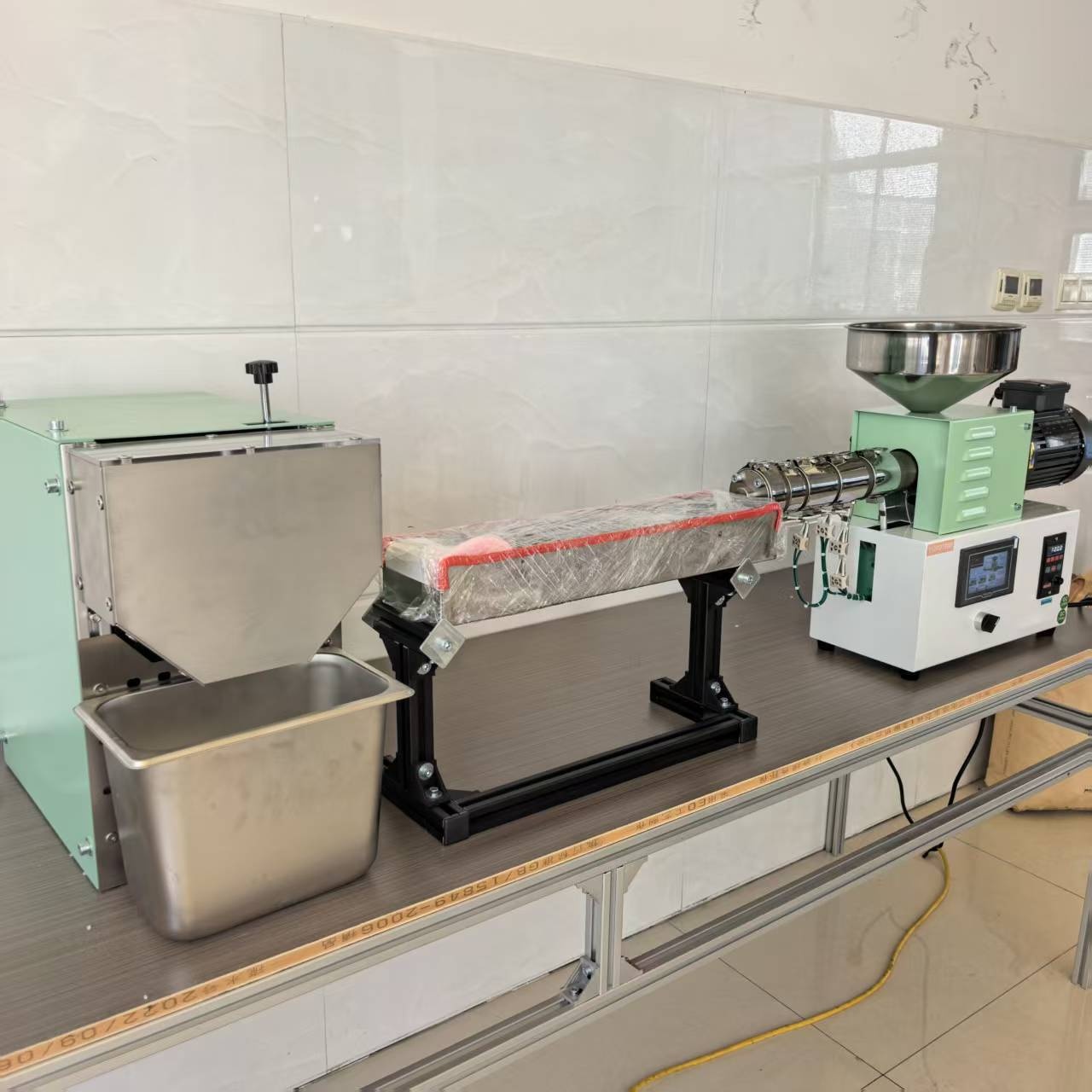



 Интернет Сервис
 +86 15960821529
 kevin@ollital.comkevinollital@gmail.com
 +86 15960821529
 +8615960821529


