
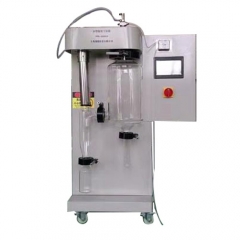
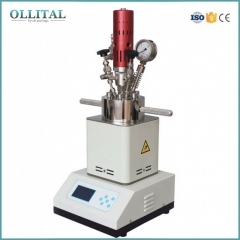
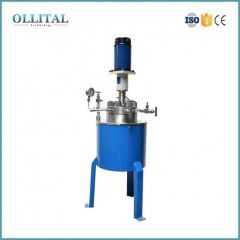
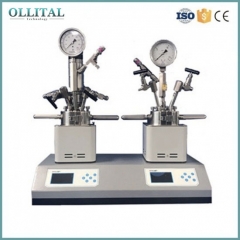
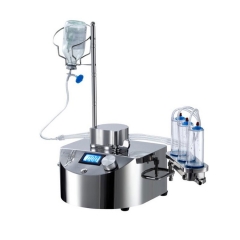
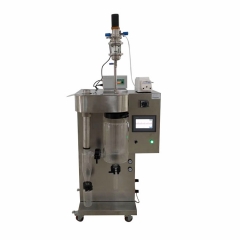
High quality 1.5L scale lab spray dryer equipment
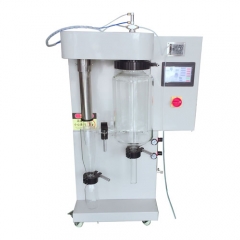
Lab scale spray dryer is suitable for the production of in universities, research institutes and food and pharmaceutical chemical enterprises.
Conventional cleaning methods — including solvent cleaning, ultrasonic cleaning, alkaline detergents, and mechanical abrasion — remain effective for removing macroscopic contaminants. However, they fall short when it comes to eliminating sub-micron organic residues or modifying surface chemical properties, exposing clear technical limitations. Plasma cleaning overcomes these limitations through a fundamentally different mechanism — not by dissolution or mechanical force, but by using energetic reactive species generated in a low-pressure gas discharge to break down contaminants at the molecular level while simultaneously introducing oxygen-containing polar functional groups that increase surface energy and improve wettability for downstream processes.
Traditional Cleaning Methods and Their Limitations
Solvent cleaning uses organic solvents such as IPA, acetone, or ethanol to dissolve oils, grease, and flux residues. While simple and cost-effective, it may leave solvent residues if rinsing and drying are not carefully controlled, and it does not provide any surface activation. Ultrasonic cleaning relies on cavitation bubbles generated in a liquid medium; their collapse produces localized micro-jets that dislodge particles from complex geometries. It is effective for removing particulates and machining debris, but has limited impact on molecular-level organic films and cannot modify surface chemistry. Aqueous cleaning with alkaline detergents and surfactants removes water-soluble contaminants while reducing VOC emissions. However, it requires thorough rinsing and drying, and can be problematic for components with blind holes or tight tolerances where fluid entrapment occurs. Mechanical abrasion — using brushes, polishing pads, or media blasting — physically removes oxides, corrosion, and surface contaminants. It carries risks of surface damage, particle embedment, and alteration of critical dimensions, making it unsuitable for most precision components.
Across all these methods, the common limitation is that they focus primarily on contaminant removal. They do not increase surface energy, improve wettability, or enhance adhesion — functions that have become essential in modern precision manufacturing.
How Plasma Cleaning Works
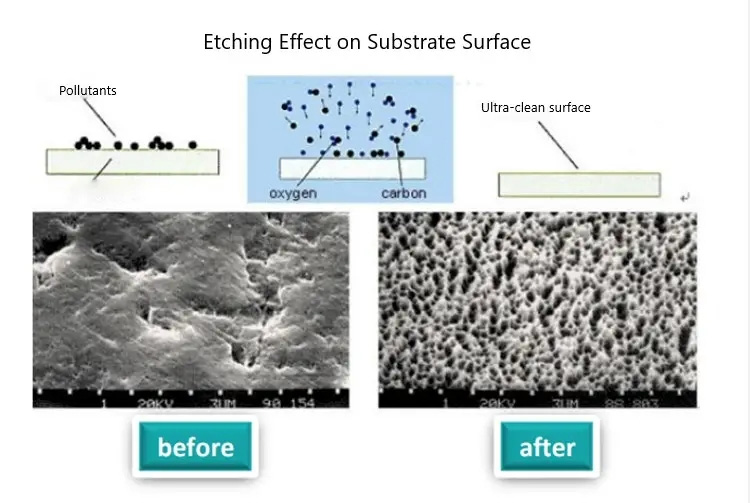
Plasma cleaning operates on a fundamentally different principle from traditional methods. Within a vacuum chamber, electrical energy is applied to ionize a process gas — typically oxygen, argon, or a mixture — generating a plasma state. This plasma consists of highly energetic species: ions, free radicals, electrons, and UV photons.
These active species interact with the contaminated surface through two concurrent mechanisms:
Why Plasma Cleaning Excels in Precision Manufacturing
Plasma cleaning offers several distinct advantages over traditional methods, making it particularly suitable for precision manufacturing applications where surface quality directly determines product performance. A plasma cleaner achieves these advantages through a fundamentally different approach — one that combines cleaning and activation in a single dry process.
1. Surface Activation, Not Just Cleaning
In precision manufacturing, cleanliness alone is rarely sufficient. Adhesives, coatings, encapsulants, and inks require a minimum surface energy to wet out properly. Plasma treatment introduces oxygen-containing polar functional groups (—OH, —COOH, —C=O) onto the surface, significantly increasing surface free energy and reducing water contact angle. This improved wettability translates directly to stronger adhesion, higher bond strength, and better long-term reliability — critical factors in semiconductor packaging, PCB assembly, and medical device manufacturing.
2. Molecular-Level Contaminant Removal
Many bond failures and process defects originate from contamination that is invisible to the naked eye — silicone oil transfer from handling, fingerprint oils, mold release agents, flux residues, and outgassing byproducts. These contaminants are often only a few nanometers thick, yet they can reduce bond strength by over 50%. Plasma cleaning removes these molecular-level contaminants completely, leaving a chemically clean surface that is ready for subsequent processing.
3. Superior Process Consistency
Traditional chemical cleaning depends on variables such as concentration, temperature, immersion time, bath age, and operator technique — all of which can vary from batch to batch. Plasma cleaning, by contrast, uses digitally controlled parameters: RF power, chamber pressure, gas flow rate, treatment time, and gas composition. This enables excellent batch-to-batch repeatability, statistical process control (SPC), and seamless integration into automated production lines.
4. Compatibility with Sensitive Substrates
Unlike mechanical cleaning methods that can abrade or damage delicate surfaces, plasma treatment is entirely non-contact. It operates at low temperatures, making it safe for heat-sensitive materials such as polymers, flexible substrates, and temperature-sensitive electronic components.
5. Environmentally Sustainable
Plasma cleaning eliminates the need for organic solvents, reducing VOC emissions, hazardous waste disposal costs, and operator exposure to toxic chemicals. It is a dry, chemical-free process that supports sustainability initiatives and simplifies environmental compliance.
Applications Where Plasma Cleaning Excels
Plasma cleaning is widely adopted in industries where surface quality directly impacts product performance and reliability:
1.Semiconductor packaging: Removal of photoresist residues, activation of lead frames, and enhancement of wire bond strength
2.PCB manufacturing: Desmear treatment, activation of via walls, and improvement of copper deposition adhesion
3.Medical devices: Enhanced bonding strength of catheter joints, improved biocompatibility of implantable components
4.Precision optics: Removal of organic contaminants and improved coating adhesion on lenses and mirrors
5.Automotive electronics: Surface activation for sensor encapsulation and improved sealing reliability
6.Aerospace components: Preparation of composite and metal surfaces for adhesive bonding and coating applications
In each of these applications, plasma cleaning ensures consistent surface conditions that traditional methods cannot achieve.
Choosing the Right Cleaning Approach
Despite the many advantages of plasma cleaning, it is not intended to replace all traditional cleaning processes. Conventional methods remain the more practical choice in certain scenarios — such as removing heavy machining oils, thick grease deposits, metal chips, dust accumulation, or bulk particulate contamination. For these tasks, solvent cleaning, ultrasonic cleaning, or aqueous cleaning are often more efficient and cost-effective.
In many production lines, manufacturers adopt a hybrid approach: they first use ultrasonic or aqueous cleaning to remove bulk contaminants, and then apply plasma cleaning as a final surface treatment step before bonding, coating, printing, or encapsulation. This combination delivers both high cleaning efficiency and optimal surface activation.
When plasma cleaning is required, the next consideration is system configuration. Plasma cleaning systems are generally available in two types:



 Интернет Сервис
 +86 15960821529
 kevin@ollital.comkevinollital@gmail.com
 +86 15960821529
 +8615960821529


